
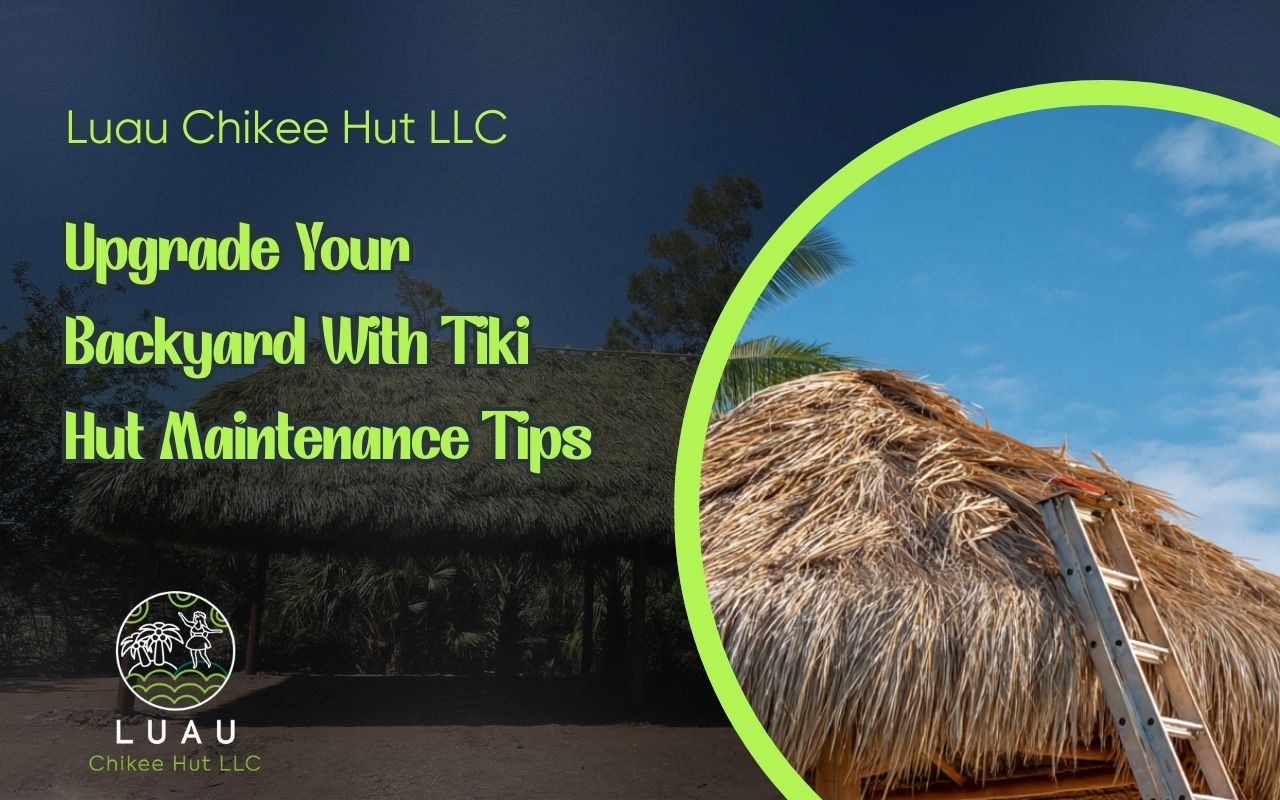
Revitalize your outdoor space with our tiki hut maintenance tips, so your backyard stays a tropical paradise year-round. In this blog post, we’ll guide you through the key care steps that keep your tiki hut looking fresh, just like the day it was built.
Whether you’re dealing with mold on the roof or wondering how often you should rethatch, this guide has you covered. Picture stepping into your backyard and feeling like you’re on an island retreat, shaded by a well-cared-for tiki hut.
Understanding Tiki Hut Care Basics
Start by learning the key parts of your structure. Most tiki huts have a wooden frame topped with palm or synthetic thatch. The wood supports the roof, while the thatch creates that classic island look. If you want a deeper overview, review how to maintain a chikee hut for simple upkeep ideas.
Maintain a routine inspection at least twice a year, ideally in spring and fall. Look for loose thatch, cracked wood, or rusted fasteners. These tiki hut maintenance tips help you spot early signs your tiki hut needs repair before they grow.
- Check roof edges for thinning or gaps
- Scan beams for cracks, soft spots, or discoloration
- Test fasteners for rust or looseness
- Note any sagging lines in the roof shape
How to Clean Tiki Thatch Without Damage
To clean tiki thatch the right way, remove leaves, twigs, and bird droppings at least monthly. Use a soft-bristle broom or a leaf blower on low power. This keeps fibers intact and improves airflow, which also helps prevent mold on tiki roofs.
Next, preserve your roof with a water-repellent solution made for natural fibers. Let it dry fully before the next rainfall. For more detail on safe products and methods, explore palm thatch roof care to keep maintenance simple and consistent.
- Clean on dry days to avoid tearing wet fibers
- Brush top-down so debris falls away naturally
- Avoid pressure washers, since they break thatch strands
- Use eco-friendly cleaners to protect nearby plants
Prevent Mold on Tiki Roofs and Treat It Fast
Moisture is the main trigger, so airflow matters. Trim back overhanging branches and clear debris near the base. Also, avoid letting sprinklers hit the roof, because damp thatch stays wet longer than wood.
If you see dark spots or greenish patches, act early. Mix a mild bleach solution (one part bleach to four parts water) and spray lightly. Wait ten minutes, then rinse with clean water. For a gentler option, mix white vinegar and water in equal parts.
- Keep branches at least a few feet away from the roofline
- Remove leaf piles that trap humidity
- Inspect shaded areas first, since mold starts there
- Rinse fully to avoid residue on thatch
Protect Your Tiki Hut From Sun Damage
Sun can fade wood and dry out fibers over time. Apply a UV-resistant sealant to beams and supports to reduce cracking and discoloration. Reapply once a year, preferably in spring, so the structure stays strong through summer.
Also, consider roof materials and placement. If you’re comparing options, see tiki thatch to understand what works best in your climate. Then, add shades or outdoor curtains for extra coverage when the sun is harsh.

How Often to Rethatch and Signs Your Tiki Hut Needs Repair
Inspect your roof every six months for worn or missing strands. If thatch looks thin in spots or water drips through during rain, it’s time to plan repairs. In many settings, natural thatch lasts about five to seven years, while synthetic thatch may last longer.
For spot fixes, weave matching bundles into the damaged area and secure them with corrosion-resistant wire. However, if wear is widespread, full replacement gives better runoff and a cleaner look. When you’re ready to plan that work, review tiki hut reretching to understand the process and what results to expect.
Tiki Hut Maintenance Schedule You Can Follow
A clear routine reduces surprises. Build a tiki hut maintenance schedule that matches your seasons. Then, track tasks in a simple log so you know what you did and when. If you maintain consistency, repairs are often smaller and less stressful.
- Spring: seal wood, clear debris, check fasteners
- Summer: mold checks, light brushing, shade planning
- Fall: tighten joints, test sealant, remove leaf buildup
- Winter: deep clean (if mild), plan upgrades or rethatching
DIY Tiki Hut Maintenance Tips for Homeowners
Keep a small kit ready, so tasks feel quick. Use a soft brush, garden shears, and a mild cleaning solution. Always work on a dry day, because the roof is safer and treatments absorb better. These tiki hut maintenance tips help you stay on top of the basics without overthinking it.
For safety, wear gloves and goggles when using cleaners. If your hut is tall, use stable ladders and consider a helper. If a task feels risky, switch to professional tiki hut maintenance services instead of pushing through.
When to Hire Professional Tiki Hut Maintenance Services
Call professionals when repairs involve high areas or structural issues. If you notice shifting posts, rotting wood, or heavy thatch loss, expert help is safer and more effective. Luau Chikee Hut LLC can handle complex fixes, deep cleaning, and detailed roof work when DIY steps are not enough.
In addition, professionals can check hidden areas, tighten support joints, and apply higher-grade sealants. If you want reliable results and less guesswork, Luau Chikee Hut LLC is a smart option for scheduled care and restoration work.
Frequently Asked Questions
How often should I inspect my tiki hut?
Inspect it at least twice a year, in spring and fall. Also, check after major storms, since wind can loosen thatch.
What is the safest way to clean tiki thatch?
Use a soft broom or a low-power blower. Avoid pressure washing, because it can rip fibers and thin the roof.
How can I prevent mold on tiki roofs?
Improve airflow by trimming branches and clearing debris. Also, keep sprinklers from soaking the thatch.
What are common signs your tiki hut needs repair?
Look for thinning thatch, leaks, sagging lines, rusted fasteners, or soft wood. Early fixes usually cost less effort.
Should I hire professional tiki hut maintenance services?
Yes, if repairs are high, structural, or widespread. For thorough inspections and roof work, Luau Chikee Hut LLC can help.
Refresh Your Backyard With Simple Upkeep
With the right routine, your hut stays inviting all year. Use these tiki hut maintenance tips, follow a tiki hut maintenance schedule, and handle small issues early. When bigger work appears, Luau Chikee Hut LLC can step in with experienced support.
If you’re also thinking about updates beyond maintenance, explore tiki hut remodeling in Fort Myers to plan improvements that match your space. For direct help, contact Luau Chikee Hut LLC through the contact page.