
How to Build a Tiki Hut is often the first thing you picture when you imagine a relaxing backyard escape. With the right plan, that dream can become a shady spot where you sip a cool drink. You enjoy the breeze and feel like you are on a tiny private island.
Building a tiki hut is not only about palm fronds and bamboo poles. It also blends creativity, simple planning, and basic structure. Whether you love DIY projects or prefer help from a custom tiki hut builder in Homestead FL, understanding the essentials lets you make smart choices from the start.
In this easy guide, you will follow clear tiki hut building steps from the first sketch to the final decor. You will learn about location, a practical tiki hut materials list, permits, post spacing, and fun finishing touches that turn a simple frame into a true backyard retreat.
How to Build a Tiki Hut: A Step-by-Step Overview
Before you buy lumber or thatch, decide how you want the space to work. Will your tiki hut be a quiet corner for two people, or a lively hangout for family and friends?
When you understand How to Build a Tiki Hut from the first sketch to the last nail, planning feels much easier. A clear idea of size and use guides your layout, post spacing, and materials list.
You can treat this as a weekend DIY goal or as a guide for talking with professionals. If you live near the Keys, you might explore custom tiki hut building in Monroe County to handle permits, heavy posts, and tricky roof work with confidence.
Designing Your Tiki Hut Blueprint
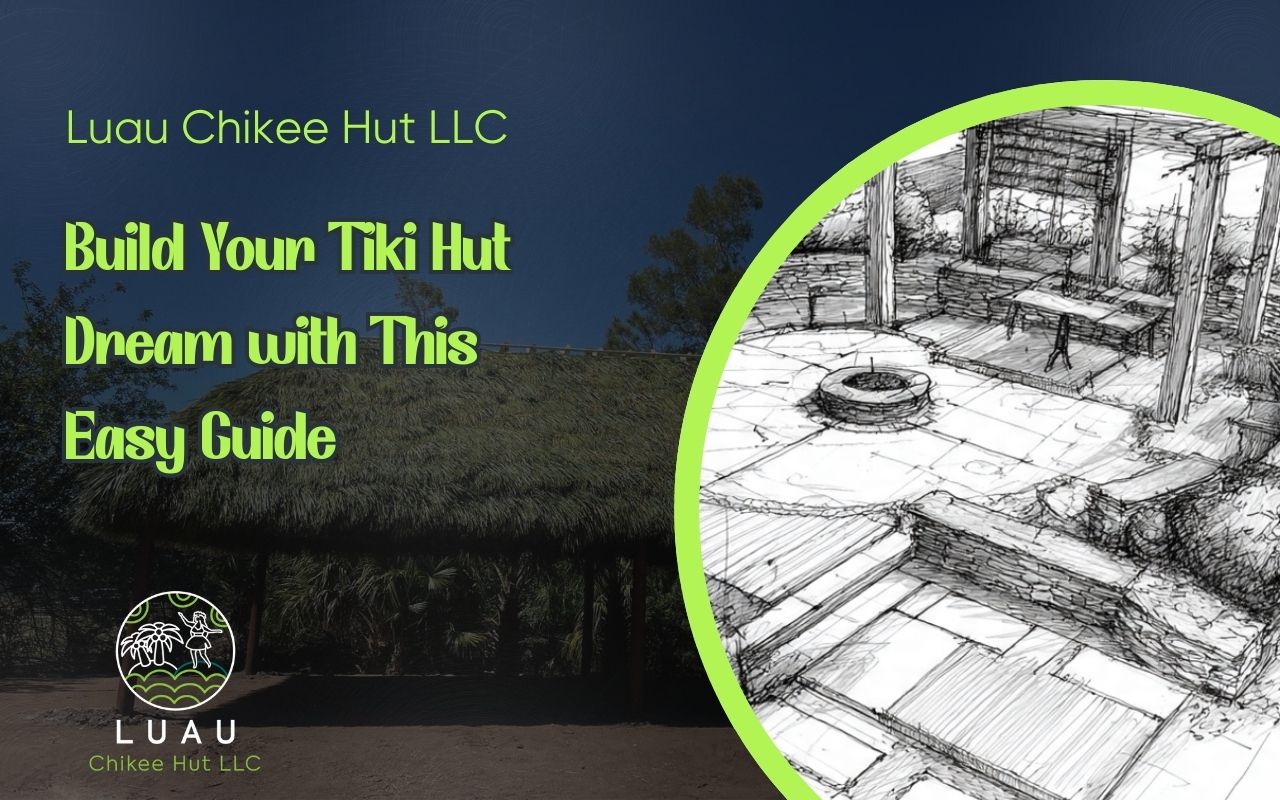
Start with a simple drawing on graph paper or a basic design app. Map how the hut fits into your yard and how people will move around it.
- Outline the hut’s footprint.
- Note the roof overhangs for extra shade.
- Mark entryways and any bar or serving areas.
- Plan seating zones and safe pathways.
This quick sketch shows how much space the hut will occupy and how guests will flow through the area. Consider sunlight, views, and nearby features so your tiki hut improves your outdoor living space instead of blocking it.
A simple blueprint becomes your road map. It can double as a tiki hut materials list that includes each beam, support post, and roofing piece. Adding dimensions, roof pitch, and suggested post locations helps both DIY builders and any custom tiki hut builder in Homestead FL stay on track and avoid costly last-minute changes.

Choosing the Right Location for Your Tiki Hut
The spot you choose affects comfort, safety, and how long the structure lasts. Take time to study your yard before you dig.
- Look for a flat area with good drainage so rainwater flows away from the base.
- Avoid placing posts under trees that drop heavy branches or constant leaves.
- Stay clear of overhead power lines and always check for underground utilities before digging.
- Think about access to power if you want lighting, fans, or a mini fridge.
Sun exposure matters as well. A western orientation catches hot afternoon sun, while an eastern-facing hut often stays cooler. Level ground simplifies your tiki hut building steps and reduces the need for major site work. Also, connect the hut to patios or walkways so guests can reach it without crossing muddy grass.
Selecting the Ideal Materials for Your Tiki Hut
A clear tiki hut materials list keeps the project organized and helps control waste. Choose materials that match your style and your local weather conditions.
- Support posts and framing: Pressure-treated lumber or sturdy bamboo poles set at least two feet into the ground.
- Roof structure: Thinner bamboo or lumber rafters spaced evenly to support the roof covering.
- Roofing options:
- Palm leaves or natural thatch for a classic tropical look.
- Synthetic thatch for longer life and less maintenance.
- Fasteners and hardware: Outdoor-rated screws, galvanized or stainless steel bolts, nails, and metal brackets.
- Finishes and protection: Weather-resistant sealants and wood treatments to resist decay, pests, and sun damage.
Whenever possible, pick materials labeled for exterior use. In humid areas like Florida, consider an underlayment beneath the thatch to reduce leaks and mold. Thoughtful choices here help your hut stand strong through storms and strong sunshine.
Understanding the Importance of Proper Post Spacing
Good tiki hut post spacing keeps the structure stable and comfortable inside. Posts that are too close crowd your seating area, while posts that are too far apart can leave the roof weak.
- For smaller huts, space posts about eight to ten feet apart.
- For larger huts, spacing can reach twelve feet if beams are strong and well supported.
In Florida’s coastal zones, slightly tighter spacing can reduce wind lift and spread the weight of heavy thatch. Mark post locations on your blueprint, then measure twice before digging. Consistent spacing helps during installation and directly affects the safety and lifespan of your tiki hut.
Building the Frame and Laying the Foundation
Setting the Main Support Posts
Once you mark each location, you are ready to set the posts. This step forms the backbone of the entire structure.
- Dig post holes so at least two feet of each post sits below ground level.
- Use concrete or compacted gravel in each hole to create a solid base.
- Check every post with a level from two directions so it stands straight.
Take your time here, because crooked or shallow posts can cause problems later. A strong base supports every other stage of construction.
Constructing the Roof Framework
After the posts are secure, you can connect them and create the roof frame. This part gives the hut its basic shape.
- Attach perimeter beams firmly to the tops of the posts.
- Install rafters or thinner bamboo poles with even spacing along the beams.
- Double-check that connections are tight, since this frame must carry the full roofing weight.
A well-built frame builds trust in the structure. It makes the space feel safe for gatherings, even when winds pick up or the roof becomes heavy after rain.
Roofing Your Hut with Thatch
Thatching the roof often looks complex at first, yet it quickly becomes a satisfying rhythm. With a second pair of hands, the work goes even faster.
- Start at the lowest edge of the roof and work upward.
- Lay palm leaves or thatch panels so each new row overlaps the row below.
- Secure each layer with outdoor-rated twine, staples, or nails, depending on the system you use.
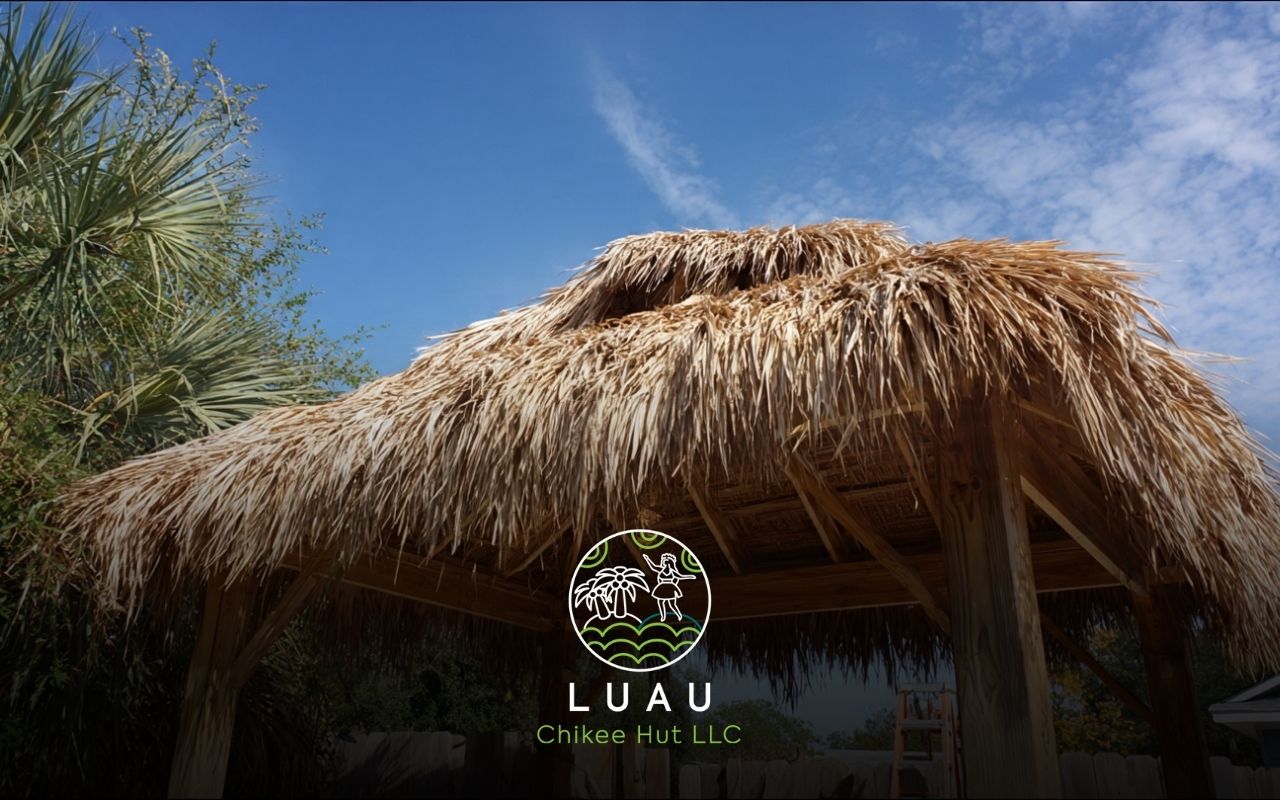
This overlapping pattern helps rain run off smoothly instead of sneaking into gaps. Whether you choose natural or synthetic thatch, following the correct pattern gives your tiki hut that classic tropical silhouette.
Before you dig holes or pour concrete, check local rules. Florida counties often have specific codes for open-sided huts and similar structures.
- Visit your city or county website, or call the building department for clear requirements.
- Prepare a simple site plan, your blueprint, and a list of key materials.
- Ask about wind-load rules, roof tie-downs, and any special details for coastal areas.
Inspectors usually review setbacks, storm safety standards, roof height, and structural details, including your post spacing. Many owners researching How to Build a Tiki Hut in Florida are surprised by these rules, so it is wise to ask questions early. A complete application keeps your project legal and ready for local weather.
Incorporating Essential Features into Your Tiki Hut
Once the structure and roof are in place, you can turn the hut into a useful and inviting hangout. This is the stage where your creativity really shines.
Built-In Seating and Bar Area
- Add a bar counter with comfortable stools for serving drinks and snacks.
- Use bench seating along the edges to save space and encourage conversation.
- Consider a convenient tiki hatch serving window so you can pass food and drinks easily from an indoor kitchen.
Storage and Decor
- Install shelves or hooks for glasses, barware, and small decorations.
- Use racks for string lights, lanterns, or hanging plants to create a warm evening glow.
- Add weatherproof storage for cushions and outdoor games when storms roll in.
Power and Comfort
- Plan safe electrical outlets for fans, lighting, and maybe a compact refrigerator.
- Include vents near the roof peak so warm air can escape without letting rain inside.
- Consider a simple gutter system if heavy rain pours off the thatch too quickly.
If your hut will sit beside a raised deck, a professional wood deck construction service can create a sturdy platform. That way, guests move comfortably between the hut, pool, and the rest of your yard.
Avoiding Common Pitfalls in Tiki Hut Construction
A little foresight helps you avoid common tiki hut building mistakes. Many issues start with rushed site prep or skipped checks.
- Do not ignore soil conditions; soft or sandy ground may require deeper footings or extra supports.
- Never use untreated or low-grade wood in ground-contact areas, since it can rot quickly.
- Keep post spacing consistent, and add mid-span supports where needed to prevent roof sagging.
- Include underlayment or flashing beneath thatch in damp climates to reduce leaks and mold.
Regularly compare your progress with the original plan and materials list. If you feel unsure about structural details or local code rules, it is safer to consult an expert or work with a trusted custom tiki hut builder in Homestead FL instead of guessing.
Enhancing Your Tiki Hut with Creative Touches
Personal touches transform a simple hut into a true tropical paradise. Small details can change how the space feels every time you step inside.
- Use woven lanterns, safely placed tiki torches, or outdoor string lights around the roof edge.
- Add waterproof cushions, natural fiber rugs, and bamboo blinds for extra comfort and privacy.
- Decorate with driftwood signs, potted palms, and bright accents that echo a beachside resort.
You might also add a small sound system for soft music or a hidden cooler for cold drinks. Thoughtful extras like these make your tiki hut the favorite spot for relaxing evenings and weekend gatherings.
Ensuring Safety, Regular Maintenance, and Long-Term Durability
Strong connections and regular care keep your tiki hut safe and beautiful for years. A little seasonal attention goes a long way.
- Use galvanized or stainless steel bolts and brackets at all major joints.
- Apply weatherproof sealant to wood and bamboo surfaces, and reapply as the product recommends.
- Inspect natural or synthetic thatch each season and replace any damaged patches quickly.
- In coastal areas, rinse salt spray from metal hardware to prevent rust and corrosion.
Plan a yearly checkup for the structure. Tighten loose fasteners, refresh finishes, and look for any early signs of wear. Steady maintenance keeps your hut safe, inviting, and ready for guests.
Frequently Asked Questions
How long does it usually take to build a tiki hut?
Timing depends on size, design, and weather. A small DIY hut might take a few weekends. Larger custom builds, especially those needing permits and inspections, can take several weeks from planning through final inspection.
Do I always need a permit for a tiki hut in Florida?
Many Florida counties require at least a simple permit, even for smaller open huts. Because rules vary by location, always check with your local building department before starting. They can explain paperwork, inspections, and wind-load requirements.
What are the best materials for a long-lasting tiki hut?
Pressure-treated lumber or quality bamboo, exterior-grade fasteners, and either durable natural thatch or modern synthetic thatch work well. In humid climates, underlayment and good sealants are vital. These choices help the structure stand up to sun, rain, and wind.
Can I build a tiki hut myself, or should I hire a professional?
With basic tools and patience, many owners handle small huts themselves. However, tall roofs, large spans, and strict local codes often call for professional help. A skilled builder can manage engineering, permits, and complex framing details for you.
How do I keep my tiki hut safe during storms?
Good post depth, secure hardware, proper post spacing, and correct roof tie-downs are essential. Before storm season, inspect all connections and remove loose decor. In severe weather areas, talk with a local pro about extra anchors and reinforcements.
Bringing Your Tiki Hut Dream to Life
Careful planning, smart material choices, and steady attention to detail make this project realistic, not overwhelming. From your first sketch to the last tie on the thatch, each stage builds on the tiki hut building steps you planned at the beginning.
Reviewing a complete plan for How to Build a Tiki Hut helps you avoid surprises and create a space you truly enjoy. Whether you finish it as a DIY project or team up with a trusted expert, your backyard can soon host a relaxing tropical retreat. If you are ready to move forward, you can contact the team to discuss your tiki hut ideas and turn your vision into a welcoming outdoor escape.